
AI for speed / QA for judgement / SuperSQE for control
AI can generate tests.Quality still needs engineering.
In this era of AI, why would QA teams and engineers still invest in a vendor application for test automation when AI can already generate test scripts, build frameworks and automate testing workflows?
Because generating tests is not the same as engineering quality. And AI is not a replacement for professional QA engineers.
Test creation, execution agents, evidence and reporting in one self-hosted platform.
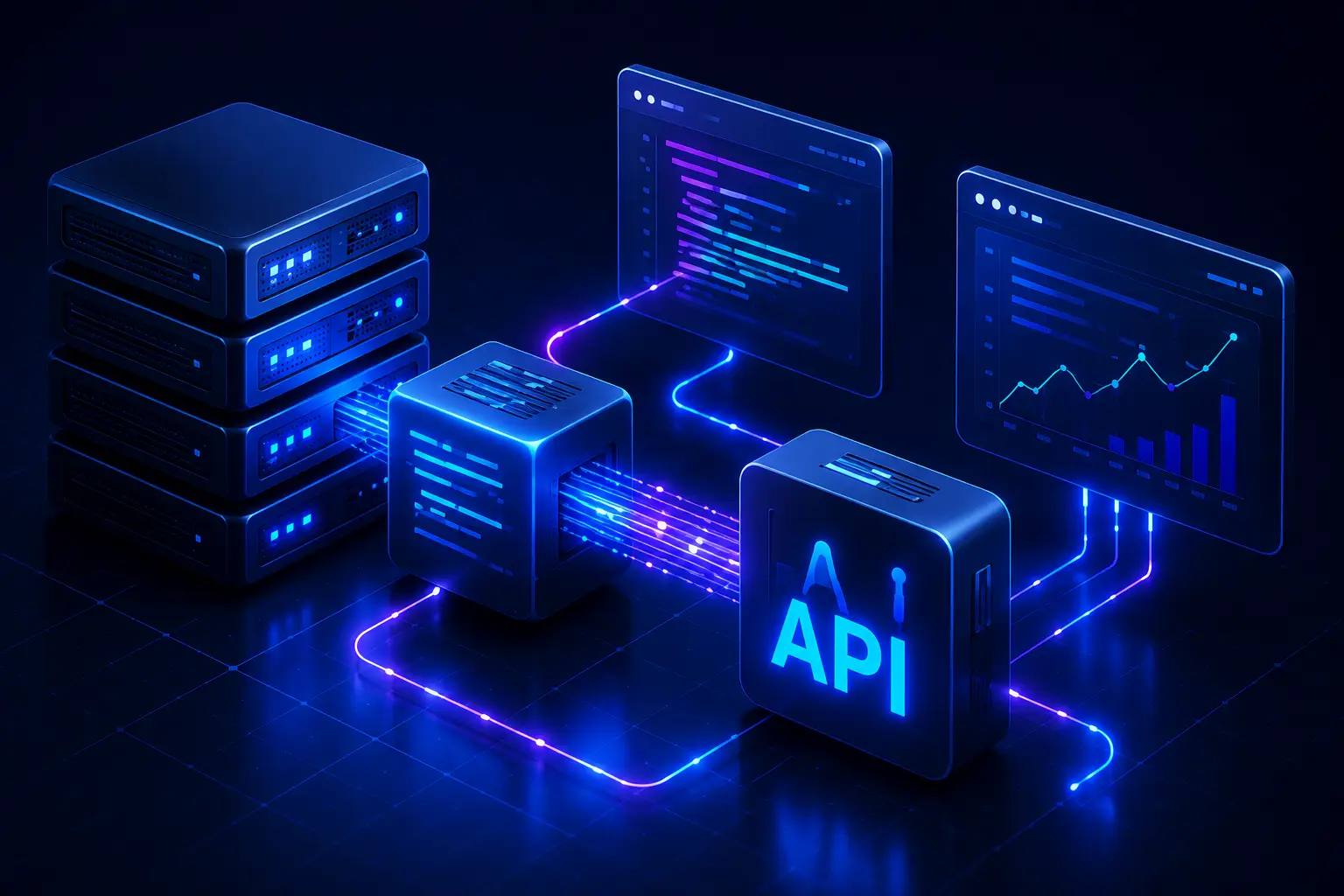
Connected execution
Web, API, mobile and performance
That is the question that we always get when we introduce SuperSQE.
AI has transformed software testing. It can generate large volumes of test ideas, suggest edge cases, draft test scripts, prepare test data and fixtures, and help explain failures using logs, errors and CI output.
But there is an important distinction: AI can assist with testing, but quality still requires human judgement.
Not every generated test case is valuable. Not every technically successful execution means the application behaved correctly. A passing status code does not necessarily mean an API response is correct. And an AI-generated assertion is only useful when it validates what should actually happen.
QA engineers must still decide:
- Which tests matter and deliver meaningful coverage?
- Are the expected results correct according to business requirements?
- Do the assertions validate actual application behaviour?
- Have important edge cases and failure scenarios been covered?
- Are business risks, security, data integrity and CI stability adequately addressed?
- Does the test evidence genuinely support the conclusion?
AI output is a draft. QA expertise turns it into a reliable test.
So, where does SuperSQE fit in?
SuperSQE is not designed to replace QA engineers or remove them from the quality equation. It is designed to empower them with an integrated quality engineering ecosystem where automation, execution, AI assistance and test management work together.
With its built-in agentic AI, Test Rex, SuperSQE helps QA teams go beyond manually creating and maintaining every test. It assists with understanding requirements, generating test scenarios, creating automation, executing tests, investigating failures and maintaining test assets.
But the responsibility for defining quality expectations, validating business behaviour and making informed quality decisions remains with the people who understand the product and its risks.
Why invest in SuperSQE?
AI-powered testing, not just AI-generated scripts
Go beyond asking an AI assistant to write Playwright code. Use Test Rex within a platform that supports structured testing workflows, execution, investigation and reporting.
One integrated quality engineering ecosystem
Bring test creation, web and API automation, performance testing, test management, execution agents and reporting together instead of managing fragmented tools and disconnected frameworks.
Human expertise with AI acceleration
Let AI handle repetitive and time-consuming activities while QA engineers focus on test strategy, business logic, risk assessment, expected outcomes and quality decisions.
Control and visibility over test operations
Manage projects, test assets, execution resources, connected agents and results from a centralised platform.
Enterprise-ready integration and flexibility
Connect with your existing development, test management and CI/CD tools while maintaining control of your self-hosted testing environment.
Built for the future of Quality Engineering
As AI becomes more capable, QA teams need more than tools that generate scripts. They need an ecosystem that helps them organise, execute, maintain and continuously improve their testing operations.
AI should empower QA engineers, not replace them.
The future of software testing is not AI versus QA engineers. It is QA engineers equipped with intelligent tools that allow them to work smarter, investigate deeper, improve coverage and deliver greater confidence in software releases.
SuperSQE brings the tools, automation infrastructure and agentic AI together to make that possible.
Don't just generate tests. Engineer quality.
The distinction
Generating tests is easy. Engineering quality is not.
AI has fundamentally changed software testing. A developer can generate Playwright scripts, create API checks, write assertions and troubleshoot errors in minutes. That is real progress, and teams should use it.
But a generated script is not a testing operation. Someone still has to decide what should be tested, where it runs, what evidence it produces and whether a failure means the product is broken.
Generating an automated test is not the same as building and operating a reliable software testing capability.
The work that remains after the script exists
Who manages the test lifecycle across projects?
Who coordinates execution across connected agents?
Who investigates failures and separates app defects from broken tests?
Who maintains test data, environments and credentials?
Who owns scheduling, reporting and integrations?
Who standardises practice as teams and applications multiply?
Who keeps the ecosystem secure, supported and reliable?
Who owns the thing after the engineer who built it leaves?
These questions remain even when AI makes writing individual scripts almost effortless.
A working script is not necessarily a working testing strategy.
Ask an AI assistant for a Playwright test that logs in, creates a customer, updates their details and verifies the result. You might have a working script within minutes. That is impressive.
Now imagine the same organisation has 15 applications, 8 automation engineers, hundreds of scenarios, multiple environments, different roles, daily deployments and thousands of executions. The challenge is no longer writing a script. It is operating and maintaining the ecosystem around it.
The application changes
Selectors break, assumptions age and assertions no longer reflect the business behaviour they were meant to protect.
The test fails
Is it an application defect, a selector, the environment, missing data, a timing issue or a genuine regression?
The suite grows
Execution slows down. Parallelism, machines, browsers, storage and scheduling become an infrastructure problem.
The organisation expands
Different teams invent different frameworks, reports and processes. Consistency becomes harder than coding.
Management needs visibility
A folder of scripts and a CI dashboard do not answer the question: what is the quality of delivery across projects?
Build or adopt
Two ways to reach the same outcome. Very different ownership.
Building an internal platform with Playwright, open source and AI is a legitimate option. For some organisations it is the right one. The question is whether assembling, integrating, validating and maintaining every layer is the best use of the engineering team you have.
Build it yourself
A collection of parts
Every part can work. The cost is the glue between them - and the people who must keep the glue working.
You own the full operating layer
With SuperSQE
An integrated operating layer
One environment for the work around the test, with the evidence and controls in the same place.
One shared operating model
Generating a test takes minutes. Operating a reliable testing ecosystem takes engineering.
Where the work goes
The real comparison is not code against no-code.
It is the ownership of the complete testing workflow. Open-source tools and AI can deliver many individual capabilities. The distinction is who selects, integrates, validates and maintains them.
Authoring and requirements
Build it yourself
AI can draft Playwright scripts, but your team still defines conventions, verifies selectors, organises suites and owns maintenance.
With SuperSQE
Recorder, plain-English authoring, requirements-to-case drafting, verified selectors and eligible self-healing in one environment.
Execution and orchestration
Build it yourself
Configure CI runners, browsers, parallel execution, scheduling and monitoring - then keep that execution layer healthy.
With SuperSQE
Central execution, connected runner agents, scheduling and licence-based parallel capacity across projects.
Investigation and maintenance
Build it yourself
Collect logs, screenshots and traces, build AI prompts and define how repairs are checked before anyone trusts them.
With SuperSQE
Execution evidence, AI-assisted failure analysis and eligible selector repair integrated into the run workflow.
Management, integrations and governance
Build it yourself
Combine Git, spreadsheets, dashboards, test management and internal portals - each with its own owner and maintenance.
With SuperSQE
Projects, roles, environments, reports, Jira/GitHub/Xray/TestRail integrations and central administration in one platform.
Capability comparison
The complete build-versus-buy view. Actual capabilities and limits depend on the edition.
| Capability | Build with AI + open source | SuperSQE |
|---|---|---|
| Generate Playwright scripts | Yes, with AI coding assistants | Yes, AI-assisted authoring |
| No-code test recording | Separate tooling or custom build | Built in |
| Natural-language test creation | Custom AI integration | Test Rex |
| Requirements-to-test-case assistance | Custom workflow | Test Rex |
| Test execution | Build and configure | Integrated |
| Connected execution agents | Configure and maintain | Built in |
| Parallel execution | Configure infrastructure | Licence-based capacity |
| Test scheduling | Build or integrate | Built in |
| Selector maintenance | Develop AI-assisted workflows | Self-healing capabilities |
| Failure investigation | Develop AI analysis workflows | Test Rex assistance |
| Test management | Build or integrate | Built in |
| Centralised reporting | Build or integrate | Built in |
| Team collaboration | Build or integrate | Built in |
| Source-control integrations | Develop or configure | Supported integrations |
| Test-management integrations | Develop or configure | Supported integrations |
| Self-hosted deployment | Assemble and maintain | Built for self-hosting |
| Backup and migration | Develop procedures | Available in Enterprise |
| Source-code flexibility | Full control of your own code | Exportable TypeScript/JavaScript assets |
Open-source technologies and AI tools can deliver many of these capabilities. The distinction is that an internal team must select, integrate, validate and maintain the complete solution. SuperSQE offers an integrated alternative; it does not make a best-fit open-source framework the wrong choice.
More than AI script generation. An AI test engineering assistant.
AI should do more than produce a block of code. It should help engineers work across the testing lifecycle - with evidence, with project context and with a human still responsible for the judgement.
Understand
Start from requirements or a plain-English brief and turn intent into test scope.
Create
Record a journey or describe it. Test Rex can act in a real browser and capture verified selectors.
Execute
Run on demand or on a schedule across connected agents for web, mobile, API and performance testing.
Investigate
Review video, screenshots, step evidence and AI-assisted root-cause analysis instead of raw logs.
Maintain
Eligible selector failures can be repaired, re-run and verified so the suite does not rot between releases.
Report
Share execution outcomes, evidence and trends with QA, engineering and product stakeholders.
AI-assisted stages require a configured model provider. Recording, execution, test management and reporting remain part of the platform whether or not AI is enabled.

Illustration only. The live walkthrough shows the real workspace, run evidence and Test Rex workflow.
See the product, not just the promise
See screenshots and a live walkthrough of Test Rex creating a test, running it, investigating a failure and reviewing the evidence in a real SuperSQE project.
Book a live product walkthroughEnterprise control
Your infrastructure. Your data. Your testing environment.
Cloud platforms are convenient, but some organisations cannot send test data, application credentials or execution evidence to a third party. SuperSQE is designed for self-hosted deployment on infrastructure you control.
- Run the platform on your servers or private cloud.
- Test internal, staging and VPN-protected applications from inside your network.
- Keep test results, execution evidence and credentials on your infrastructure.
- Validate licences offline for air-gapped and restricted environments.
- Connect additional execution agents within your environment.
- Control retention, upgrades and operational ownership.
What self-hosting does - and does not - guarantee
Self-hosting keeps the platform and its data in your environment. It does not automatically make every AI operation offline. That depends on the model provider you configure.
Configurable AI providers
Test recording, execution, scheduling, test management and reporting do not require an AI model. Test Rex assistance requires a configured provider.
Your automation. Your flexibility.
Build your testing assets. Manage them centrally. Retain flexibility over your code.
Starter and Enterprise editions support exporting project automation assets in TypeScript and JavaScript. Compatible engineering teams can continue working with those assets in their preferred IDEs, and you are not forced to abandon the value of your automation when your management tooling changes.
Export availability depends on the edition and project.
SuperSQE is particularly relevant if you:
- Have multiple QA teams, projects or application portfolios.
- Spend significant engineering time maintaining frameworks and runners.
- Need centralised execution, evidence and reporting.
- Want to introduce AI-assisted testing without rebuilding your workflow around prompts.
- Need testing infrastructure inside your own network.
- Want to reduce the number of disconnected testing tools.
- Need a platform that can grow with the testing operation.
An open-source framework may be enough if you:
- Have one application and a small, stable automation suite.
- Have engineers who want to own the framework and execution layer directly.
- Do not need central test management, agent orchestration or shared reporting.
- Do not need self-hosted AI assistance or internal network execution.
- Can operate runner infrastructure without it becoming a delivery bottleneck.
If that is your reality, an open-source framework may be the better investment. A good platform decision starts with an honest fit assessment, not a feature checklist.
Evaluate the fit
Do not take our word for it. Put SuperSQE to the test.
Every installation starts with a 30-day free trial. Evaluate it against realistic application workflows, not a canned demo. Then compare the evidence with your current approach.
Questions to score during evaluation
How long does it take to create equivalent tests?
How much effort is required to maintain them?
How easy is it to manage execution across projects?
How effectively does Test Rex assist with failure investigation?
How much infrastructure and integration work remains ours?
Does it meet our security and deployment requirements?
What is the total cost of ownership over three years?
Common questions
A credible platform decision needs credible answers.
These are the questions technically sophisticated buyers should ask any AI testing vendor - including us.
Where the proof should come from
- Your own applications and test data.
- Your own deployment and security constraints.
- Measured authoring, execution and triage effort.
- A three-year total-cost view, not a feature poster.
Is SuperSQE an alternative to building a test framework with Playwright and AI?
It can be. AI can generate Playwright scripts, and that is a legitimate approach. SuperSQE is for organisations that want an integrated layer for test creation, execution, agents, management, AI investigation and reporting rather than assembling and maintaining every component themselves.
Does SuperSQE replace QA engineers?
No. It is designed to remove repetitive engineering work so QA engineers can concentrate on risk, coverage, investigation and quality decisions. A green report does not prove that the right things were tested.
If SuperSQE is self-hosted, does AI run fully offline?
Not automatically. The platform, test data, evidence and credentials run on infrastructure you control, but AI inference depends on the model provider configured by your administrator. External providers receive the context needed for the request. Ollama or a custom endpoint inside your network can keep inference local. Self-hosting the platform and keeping every AI operation offline are separate decisions.
Can we export our automation assets?
Starter and Enterprise editions support project exports of TypeScript/JavaScript automation assets, subject to the edition and project. The Free edition does not include exports. Your team should still agree how exported assets will be owned and maintained.
Does a 100% pass rate guarantee software quality?
No. A passing suite only proves that the checks you wrote passed under the conditions you ran. Coverage, assertions, test data and judgement still decide whether the result is meaningful.
Further reading
Go deeper on the build-versus-buy argument
6 min read
AI Can Generate Tests. Who Maintains the Testing Ecosystem?
AI makes test authoring faster. It does not remove test strategy, execution, agents, environments, triage, reporting or ownership. Here is the operational work that remains.
Read the guide6 min read
Build vs Buy: The Real Cost of Enterprise Test Automation
A practical three-year way to compare an internally built test automation platform with a self-hosted product - including the engineering, infrastructure and ownership costs teams forget.
Read the guide5 min read
Why a 100% Test Pass Rate Does Not Guarantee Software Quality
A green suite only proves that the checks you wrote passed under the conditions you ran. Coverage, assertions, data, environments and judgement still decide whether that result means anything.
Read the guide5 min read
AI Is Not Killing QA Engineering. It Is Changing Its Responsibilities.
AI is removing repetitive test-authoring work while increasing the importance of risk judgement, test design, evidence review and ownership of the quality system.
Read the guide5 min read
Why Self-Hosted Testing Matters to Enterprise Organisations
Data residency, internal network access, predictable cost and operational control make self-hosted testing compelling - but self-hosting is not the same as fully offline AI.
Read the guideReady to move beyond individual automation scripts?
Evaluate SuperSQE with realistic workflows, your own infrastructure and your own definition of quality. Then decide whether an integrated operating layer is a better investment than maintaining every part yourself.
SuperSQE - One platform. Every test. Smarter quality.